How long should we expect a model to hold users? With model launches coming fast and furious, even the most well-loved models will cede way to newer variants over time.
Model launches have accelerated
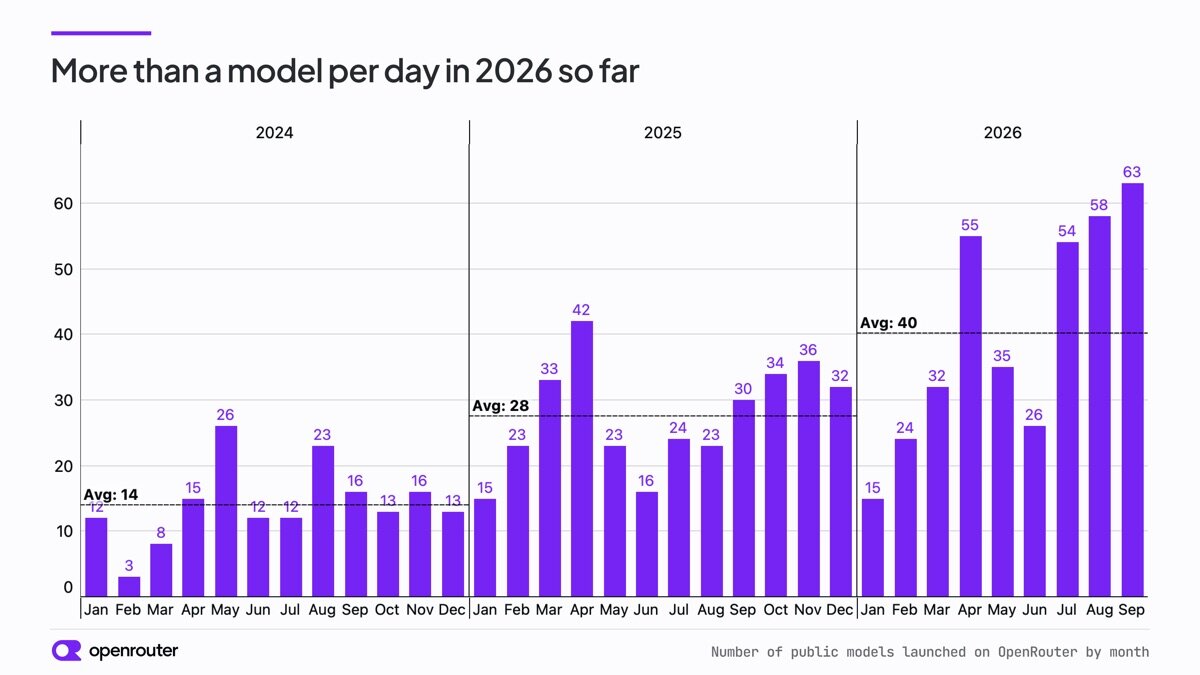
One major factor impacting model retention is an increasingly competitive model marketplace. So far this year, 40 models a month have launched on OpenRouter.
This pace is only likely to increase over the coming months and years. Whichever model you are currently using will have more and better competitors in shorter and shorter timeframes. Which puts the onus on the user (or organization) to evaluate more frequently even if they choose to stick with the model they have.
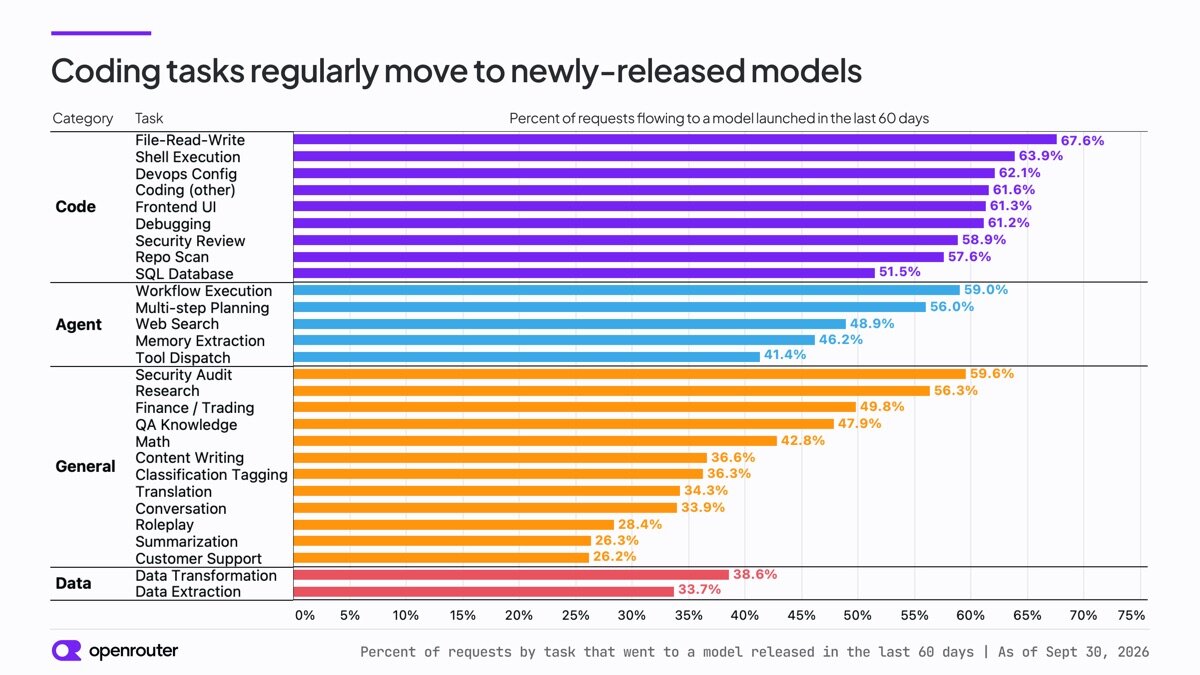
Not all workloads seem to be under the same pressure, however. Coding tasks are much more likely to be running on a model released in the last 60 days when compared to AI work in other fields like content writing, classification tagging, or customer support.
This suggests that certain workloads are less able to be saturated by intelligence (or at least that the value of more intelligent models is clearer in those domains). Whereas a task that involves extracting data from a PDF can be handled with less intelligent models as long as the accuracy clears a certain bar.
While correlated, the chart above isn’t a view into cost-per-completion. Some new models are cheaper than older ones and some much more expensive.
Model retention is falling
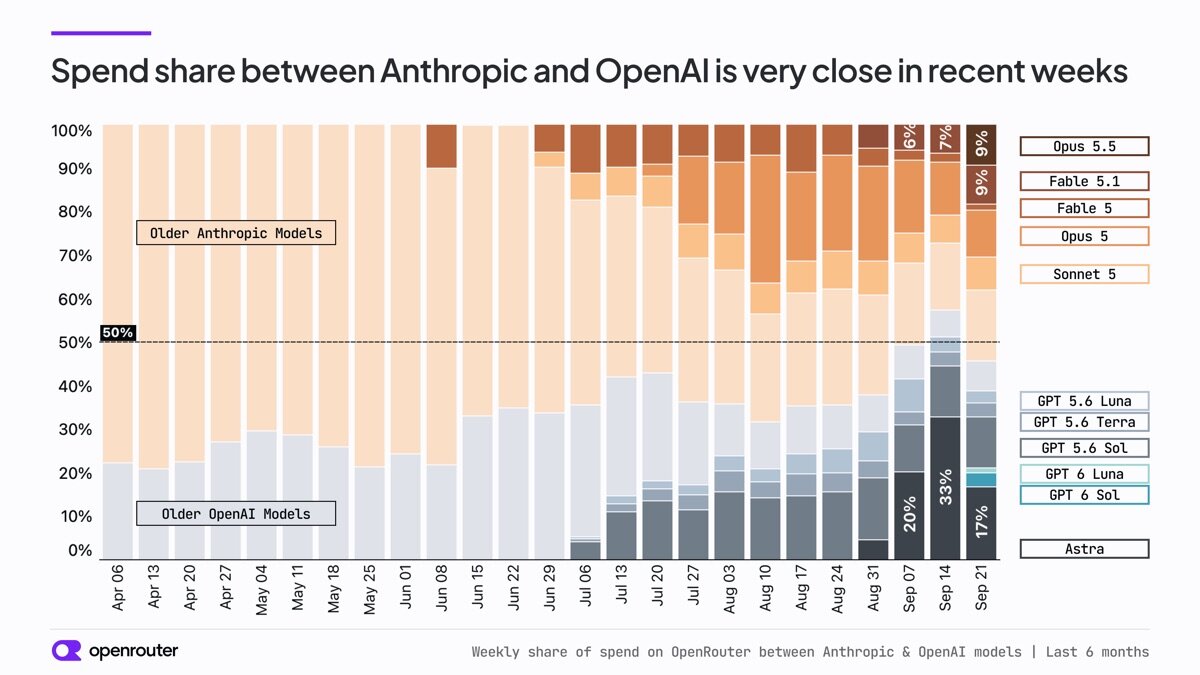
There was a kerfuffle recently about OpenAI overtaking Anthropic in this view on relative share of dollars spent. The wider trend back over the past year saw OpenAI consistently creep back towards parity.
And then Opus 5.5 has a strong launch, the adoption in week one is impressive, and the narrative shifts. On the other side, OpenAI has already (after only a handful of days) released GPT-6.1 Sol which means GPT-6 Sol is unlikely to gain any broad traction. Any metrics on retention for GPT-6 Sol are likely to be swamped by the model release pace rather than any specific issues with the model quality.
It seems that this rapid launch calendar, coupled with the competitive dynamic, has increased pressure on the first impression. A user who is disappointed in their initial engagements with a new model is more inclined to jump than ever.
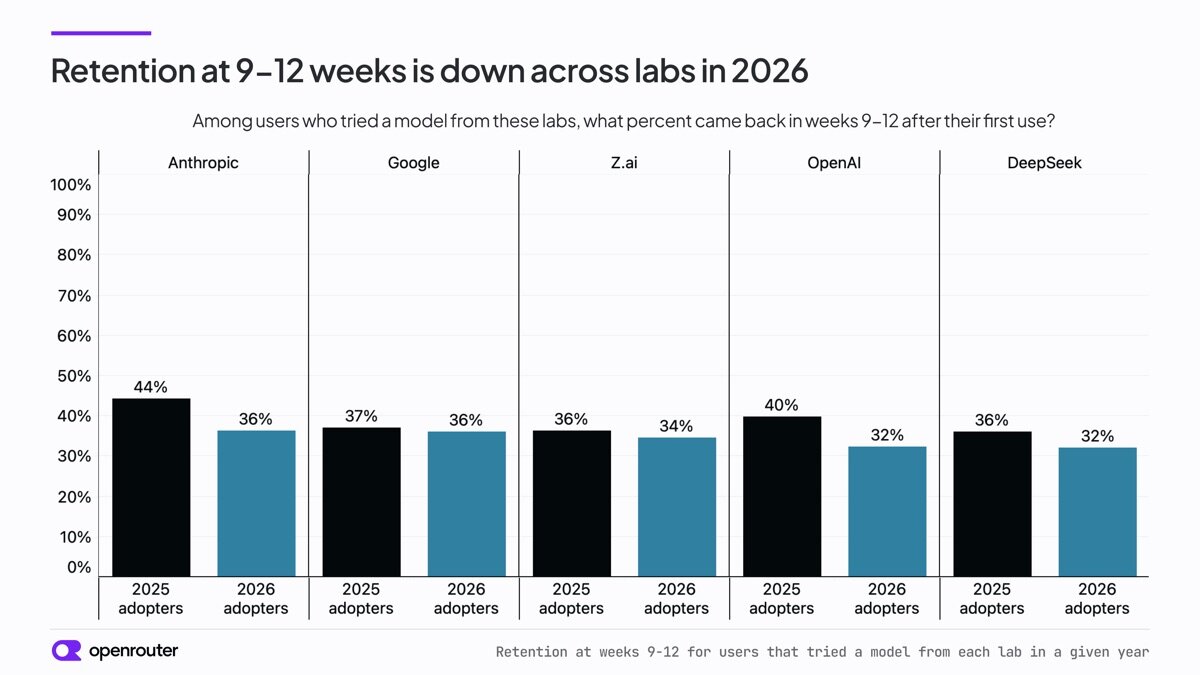
Aggregated to the level of the labs, we see retention falling almost across the board from 2025 to 2026. The chart defines retention as “among users who tried a model from these labs for the first time, what percent came back and used a model from this lab in weeks 9-12?”
That’s a mouthful. The data is pretty clear, however. Users have become more fickle and that willingness to jump is not constrained to any one model maker.
Multi-model is increasingly the default position, but knowing which new addition to add to your roster is a consistent challenge. Or you could just ask Ori.
Onwards,
Peter
PS - if you’re in San Francisco for Tech Week next week, join us on Tuesday Oct 6th for our very first State of Models event. A full data report from OpenRouter tokens, couple with a fireside chat with George Cameron of Artificial Analysis - if you like data, you shouldn’t miss it.
Share charts are computed within the segment named in each chart's footer. All charts exclude reseller activity.